GLOBAL ACTIONSGIBS Business School, South Africa
GLOBAL ACTIONSGIBS Business School, South Africa
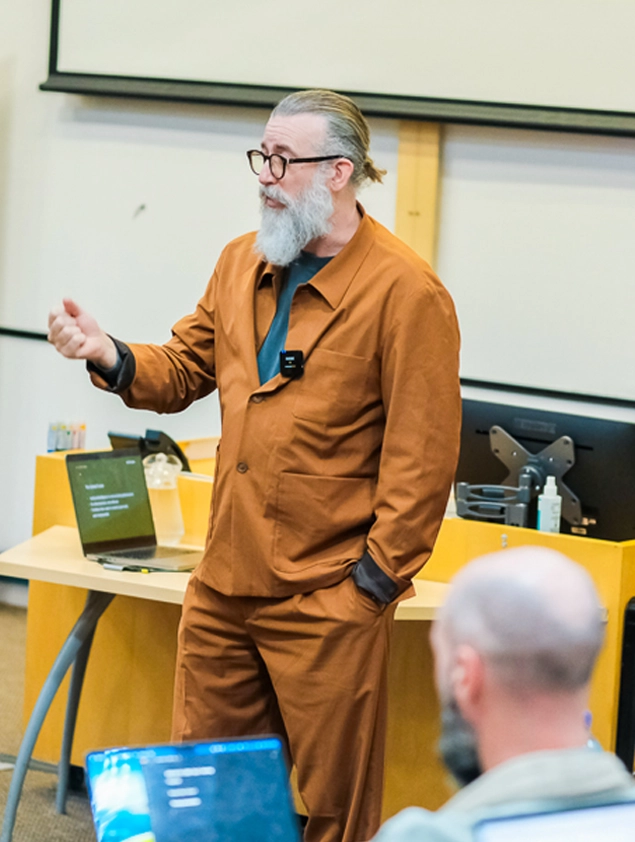
Pax Technologica's return to Africa took place at GIBS Business School in Johannesburg from 13th to 15th April 2026. Working in partnership with AICE Africa, we supported the delivery of the programme Leading Enterprise AI Organisations: When Knowing Is No Longer Power, a three-day immersive intervention at one of Africa's most respected executive education institutions.
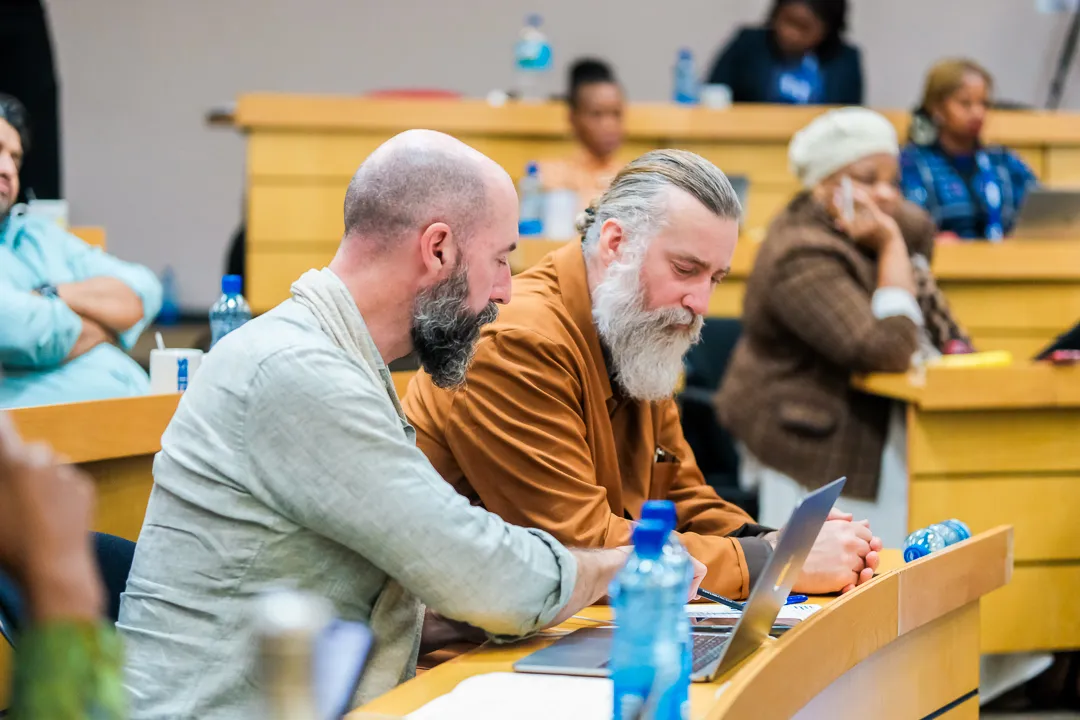
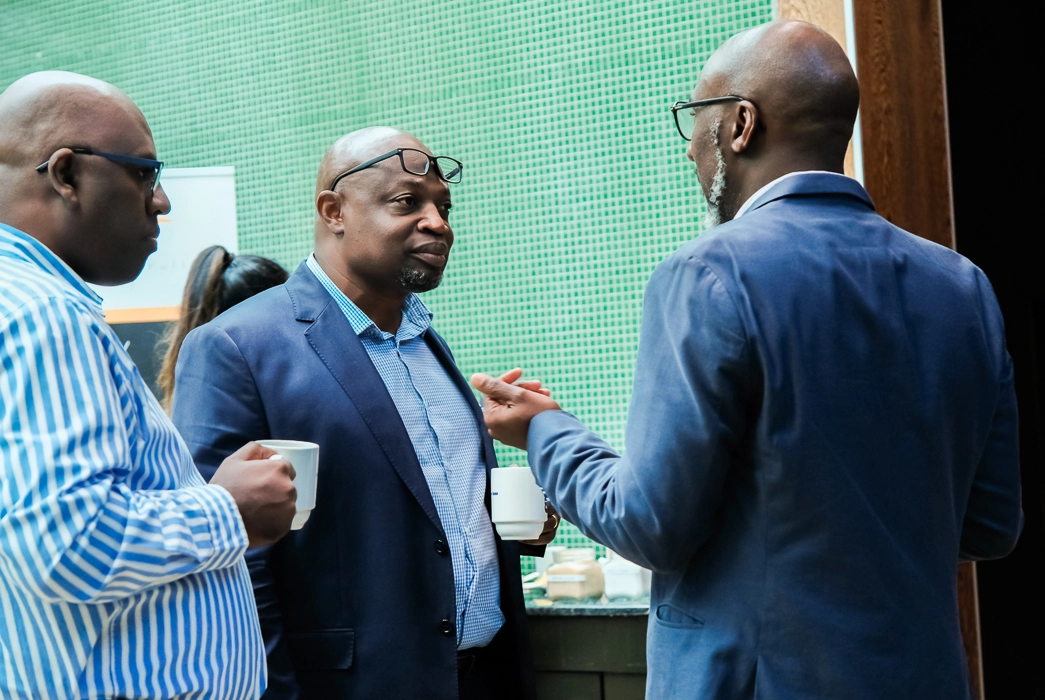
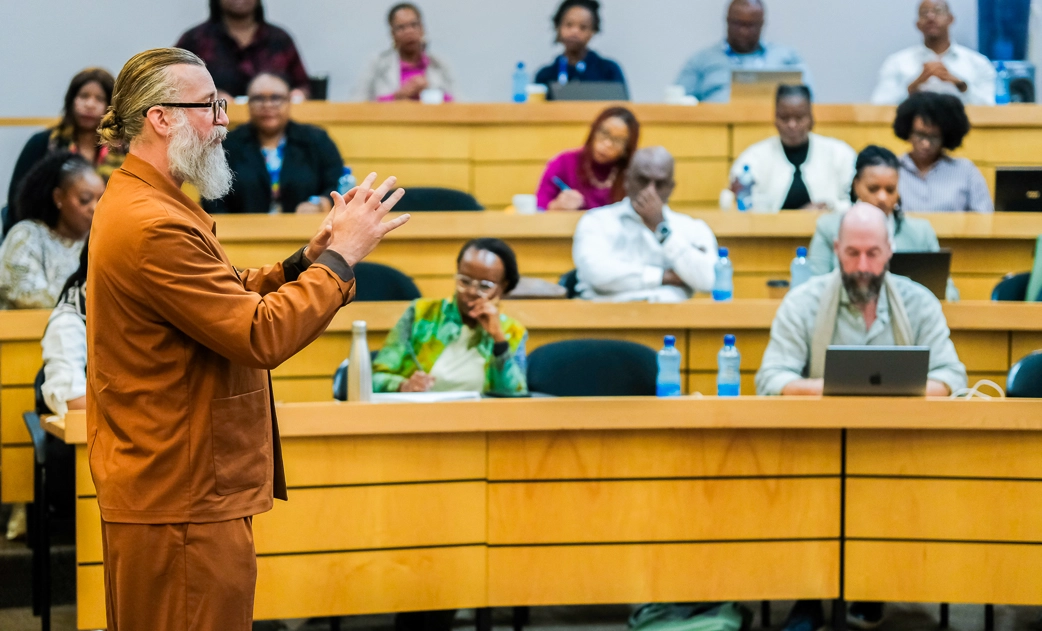
Approximately fifty senior executives, entrepreneurs, and institutional leaders engaged with the programme over three days, demonstrating a depth of awareness, criticality , and ethical seriousness that confirmed our belief in the power of business education as the fastest lever for enterprise AI adoption.
The framing of the programme drew on a question that has been at the heart of Pax Technologica's work since its inception: who will build Africa's Intelligence Economy? In March 2026, AICE Africa and Pax Technologica co-published Architects of the Possible, Paper 001 of the Intelligence Economy Paper Series, a response to precisely this question. As Carlota Perez's work on technological revolutions demonstrates, the nations and institutions that commit infrastructure capital during the installation phase of a technological era go on to set the terms for the deployment phase that follows. Africa is within this installation phase. The decisions being made in the next 36 months, about compute ownership, data governance, model sovereignty , and enterprise adoption, are the infrastructure decisions of the intelligence age.


Our approach at GIBS embodied the Grand Curation method that shapes every Pax Technologica global action: framing the discourse, convening diverse and genuinely capable participants, curating thought-provoking discussions, and sparking innovative solutions. We approached the work with humility , not as teachers importing frameworks from outside, rather as participants in a conversation that Africa's own experts are best placed to lead. The outcome was three days of unusually honest, intellectually alive, and practically grounded inquiry.
Architects of the Possible, Intelligence Economy Paper Series, Paper 001, 2026
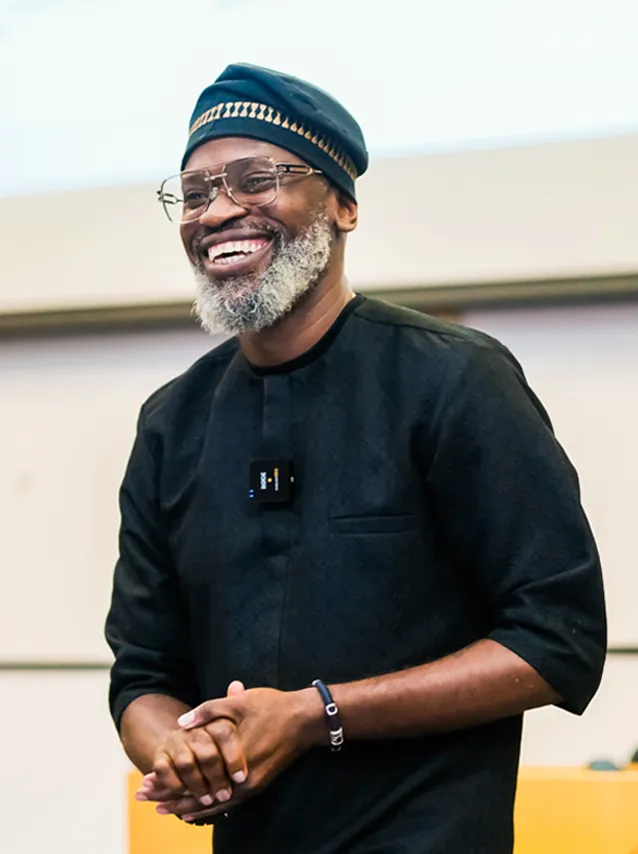
The final day opened with a keynote by Thomas Ermacora, founder of Pax Technologica, which set the geopolitical and civilisational frame for the enterprise work that followed. Arguing from history , architecture, and proximity to the world's leading AI institutions, Ermacora positioned Africa's defining challenge not as a technological gap, rather as one of orchestration and ownership. "Africa generates intelligence every second," he told the room. "The question is ownership. We are living an African moment." The keynote moved from strategy to responsibility , framing enterprise AI adoption as an act of authorship: Africa must choose its future rather than inherit one.
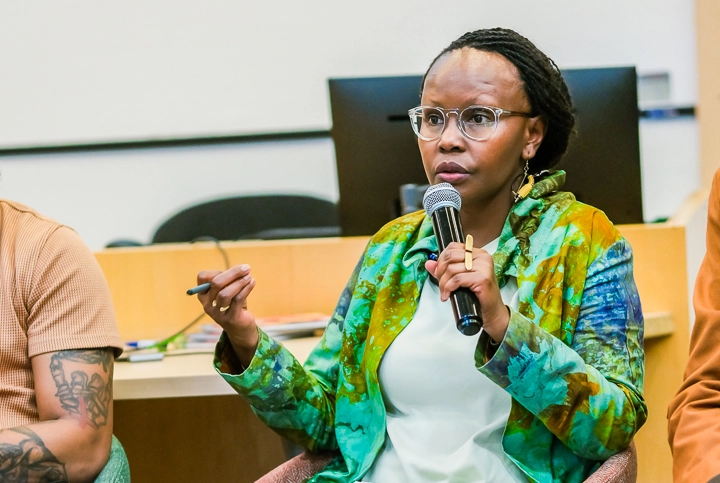
The three-day programme was structured around six interlocking objectives: shifting executive power from knowing to judging; redefining personal leadership when expertise is no longer scarce; developing organisational AI readiness as enterprise intelligence rather than scattered AI activity; reframing strategy for an AI-enabled competitive landscape; teaching the PDI (People, Data, Infrastructure) framework; and leading responsible AI execution under conditions of heightened regulatory and ethical scrutiny . The programme was co-delivered by John Kamara and Irene Phoebe Kiwia of AICE Africa, Nicola Tyler of The Thinking Company , and Dudu Msomi of Busara Leadership Partners, alongside Pax Technologica.
Business education proved to be an optimal setting to accelerate enterprise adoption of AI. The participants engaged with both the theoretical and operational dimensions of AI strategy with a depth that is rarely encountered. They were thoughtful, critical, and ethically grounded as they explored how to leverage AI not as a productivity tool alone, rather as a system-level technology , like electricity , that shapes how decisions are made and where power flows across organisations and societies.

Our relationship with AICE is becoming foundational to Pax Technologica's work in Africa. Together, we are developing a joint venture studio structured around three tracks. The first is to productise AICE's existing portfolio of client-based work, transforming consulting engagements into scalable enterprise solutions rooted in African realities and built by African entrepreneurs and engineers. The second is to create products designed for broad African use with potential global applicability , beginning with AI agents. The third is our impact track, focused on high-leverage sectors including education, healthcare, and agriculture, where small language models offer particular promise. A hackathon is planned for autumn 2026, with a formal studio launch anticipated in Q3 and Q4.
We are also exploring collaboration with governments. AICE is currently advising several administrations across East Africa, and we believe that Pax Technologica's policy intelligence work can contribute meaningfully to B2G solutions, combining training programmes with venture design tailored to public sector needs. Procurement, as we have argued elsewhere, is not an administrative function; it is the most powerful industrial policy instrument available to African governments, and currently the most underused.
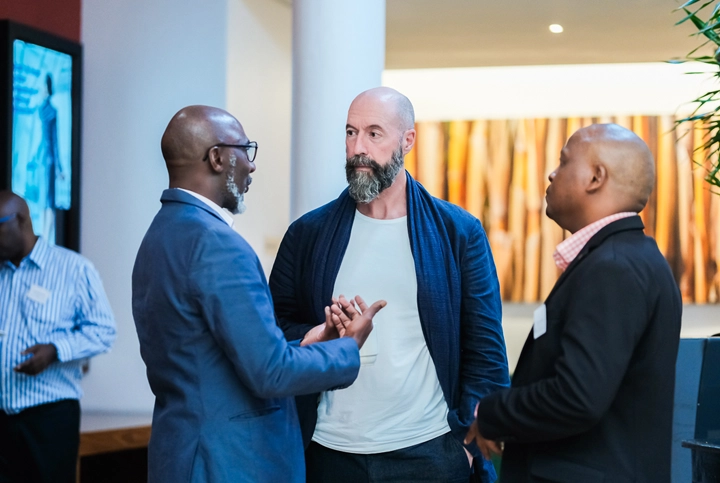
The broader geopolitical context of this work cannot be set aside. At a time when major AI companies are raising unprecedented capital and AI is increasingly embedded in global power dynamics, it is essential for Africa to understand and assert its geopolitical relevance. In collaboration with Nils Gilman, Pax Technologica is preparing an essay exploring how Africa can position itself within the evolving global landscape. Africa must be practical in adoption, and strategic, even geostrategic, in its long-term positioning.
In all its activities at GIBS, Pax Technologica was guided by the principles that animate every global action: approach Africa's intelligence future with humility; build on and amplify the great work already being done; co-create with the people most affected; prioritise real needs over technology for its own sake; and pursue non-extractive investment that serves African communities rather than extracting value from them. The experience at GIBS was, in this sense, a continuation of the methodology first developed in Florence, and a deepening of the commitment that brought Pax Technologica to Davos.
Architects of the Possible,Intelligence Economy Paper Series, Paper 001, 2026
The ten insights below are grounded in Architects of the Possible and in what emerged from three days of enterprise dialogue at GIBS, when African business leaders engaged with the intelligence economy as an immediate strategic reality , not an abstraction.
02
The future is collapsing into the present
Living strategy is not plan-then-execute. Competitive advantage comes from continuous anticipation. Timing and positioning matter more than raw intelligence. Leaders who wait for certainty before acting will find that the window for decisive positioning has already closed.
03
Africa's mental models are the real constraint
Africa does not lack data, talent, or capital; it lacks coordination and shared narrative. The missing ingredient is a mental model that believes in and activates the African moment. No foreign institution can supply this. It must be generated from within, by African leaders, institutions, and enterprises working in concert.

04
Thinking precedes intelligence
Perception and attention determine what intelligence you bring to any situation. AI amplifies your thinking, however first, you have to think. Deliberate practices that elevate perceptual capacity and the quality of attention are more foundational to enterprise AI success than any tool, platform, or deployment methodology .
05
Enterprise is the lever: company culture codes society
How enterprises adopt AI shapes how nations do. Enterprise is the fastest place to set the culture of intelligence. Enterprise adoption precedes and ultimately influences government policy . The decisions each executive makes today about how to integrate AI are, in aggregate, civilisational decisions about the kind of intelligence future Africa will inhabit.
06
The problem is decisions, not data
Data is constantly generated everywhere. The challenge is how it is structured before systems are built. The right starting question is not "what data do we have?" rather "what decision are we trying to improve?" Clarity precedes connectivity; connectivity precedes capability . Most AI failures in organisations are organisational, not technical.

07
Speed is core strategy
Speed of thought times one thousand. Speed of action times one hundred. Speed of iteration times ten per month. Governance, not technology , is the bottleneck in almost every enterprise we encountered. A 'speed board', meeting quarterly , empowered and small, is a structural fix available to any organisation willing to use it.
08
Five shifts that define the decade
The transformation to an AI-enabled enterprise requires five fundamental shifts: from past reporting to future anticipation; from siloed knowledge to connected intelligence; from gut decisions to evidence-grounded decisions; from reactive to proactive operations; and from human bottlenecks to Human and AI teams operating at scale. Most organisations are still at the beginning of this journey , and the distance is an opportunity.
09
Compound knowledge as organisational intelligence
The most valuable AI investment any organisation can make is a central intelligence layer that accumulates and compounds over time, institutional memory that remains in the organisation even when individuals leave. The question is not whether to use AI; it is whether you are building a system that learns. Organisations that build this first create an irreplaceable and durable advantage.
10
Career portfolio, not career profile
The shift is from a fixed role identity to an evolving portfolio of skills and relationships. Qualitative human capital, judgement, contextual intelligence, relationships, is the new frontier as AI increasingly handles structured work. The most valuable investment any executive can make is in the qualitative capabilities that no AI would replicate, however every AI could amplify.
Pax Technologica brings its next global action to the Blavatnik School of Government, University of Oxford, on 22nd and 23rd June 2026. The Oxford Africa Symposium convenes policymakers, scholars, technologists, founders, and institutional leaders to explore African possibility in the age of AI, at the intersection of governance, technology , policy , and venture execution. The gathering also marks the public launch of the Pax Technologica Venture Studio, developed in partnership with AICE Africa.